Public knowledge, attitudes and practices related to eye diseases in southern indian population
Background: This study was conducted to determine the level of the public knowledge, attitudes and practices related to common eye diseases in the southern Indian population. Methods: A cross sectional population-based survey used a semi structured questionnaire on awareness, knowledge, attitude and practices related to eye diseases. Stratified multistage cluster random sampling method was used with a sample size of 867 adults >16 years based on, estimated awareness of cataract 70%, assuming an expected rate of 85%, design effect of 1.5, margin of error 4% with 95% confidence interval with 25% from urban areas and 75% from rural areas. A pilot study was conducted to validate the questions used in the main study. SPSS (version 19) used for analysis. Results: A total of 782/867 (90.1%) subjects participated in the survey, with females 47.4%. Awareness of major eye diseases for cataract 81.5%, glaucoma 47.8%, refractive error 74.3%, squint 89.0%, diabetic retinopathy 65.0% and age-related macular degeneration 36.7% respectively. 41.8% subjects reported wearing glasses either for distance, near or for both. Of the 777 subjects only 294 people underwent an eye examination by an ophthalmologist in the last two years (37.8%). 57.5% subjects had knowledge of the nearest eye care facility within five kilometers of their residence. Electronic media were the major source of information on eye health. Conclusions: Though the awareness levels of common eye diseases were quite high, the knowledge of cataract (10.4%) was poor. There is a need to increase the level of awareness for eye diseases like glaucoma and age-related macular degeneration.
 Srinivasa reddy pallerla
Human resource management - mind map on traditional functions of hrm
Human resource management refers to the process of employing people, training them, compensating, and developing policies and strategies to keep them (Storey, 2016). Personnel management is an administrative specialisation that focuses on hiring and developing employees to become valuable to the organisation (Bondarouk, Trullen, and Valverde, 2016). Management of personnel can be characterised as a satisfied workforce being achieved, used, and maintained (Sheehan, Garavan & Carbery, 2014). It constitutes an essential aspect of the management of employees in the organisation and their connection. According to Schroeder (2012, p.4), personnel management is achieved to help organisational, individual, and social goals, as the planning, organisation, offsetting, and maintaining of people. Vargas et al. (2018, p. 3052) add that personnel management is the element that primarily deals with human organisational resources. Management of personnel covers job, development, and compensation functions. In consultation with other departments, the personnel management performs these functions principally (Vargas et al., 2018, p. 3053)
 Zamzam abdelazim
Two-stage rfid approach for localizing objects in smart homes based on gradient boosted decision trees with under- and over-sampling
Developing automated systems with a reasonable cost for long-term care for elders is a promising research direction. Such smart systems are based on realizing activities of daily living (ADLs) to enable aging in place while preserving the quality of life of all inhabitants in smart homes. One of the research directions is based on localizing items used by elders to monitor their activities with fine-grained details of the progress. In this paper, we shed the light on this issue by presenting an approach for localizing items in smart homes. The presented method is based on applying machine learning algorithms to Radio Frequency IDentification (RFID) tags readings. Our approach achieves the required task through two stages. The first stage detects in which room the selected object is located. Then, the second one determines the exact position of the selected object inside the detected room. Additionally, we present an efficient approach based on gradient boosted decision trees for detecting the location of the selected object in a real-world smart home. Moreover, we employ some techniques of over- and under-sampling with data clustering for improving the performance of the presented techniques. Many experiments are conducted in this work to evaluate the performance of the presented approach for localizing objects in a real smart home. The results of the experiments have shown that our approach provides remarkable performance.
 Shadi abudalfa
Stress among banking employee- a literature review
For banking employees around the globe, stress on the job can be a challenge; stress can be sometimes positive and sometimes negative. Positive stress leads to productivity and negative stress leads to loss for the organization. There is already a certain level of stress in Banking employees work life and then encounter even more stress arising from the work pressure that Banking employees face on the job. Many employees cannot cope with such rapid changes taking place in the jobs. Role conflict, Service for customer, contribution, rapid technological change, lack of customer response is the great transaction of stress for the banking workers. The aim of this research is to understand roots and outcomes of job stress on the employee performance in banking sector.
 Dr manjunatha m k
Who’s updated recommendations: a renewed call to strengthen global and local commitments toward malaria elimination
To the editor, On April 24, 2025, the World Health Organization (WHO) issued an urgent call to reinvigorate global action to end malaria, releasing updated guidelines that reflect both progress and persisting challenges in combating this deadly disease. [1] This renewed guidance arrives at a critical juncture: global malaria cases have plateaued, progress is faltering, and health systems in endemic regions face increasing strain from drug resistance, climate change, and funding shortfalls.
 Karishma
Study of biophysical and structural mechanisms of resistance in pigeonpea against pod borer complexstudy of biophysical and structural mechanisms of resistance in pigeonpea against pod borer complex
The maximum H. armigera and M. vitrata infestation was recorded in Pusa-992 (3.72% and 7.90%) and in D2 (1st week of July) sown crop with infestation of 4.54 and 13.08 per cent, respectively. Whereas, the infestation of pod fly, M. obtusa was maximum in Manak (2.72%) and 2.58 per cent pod infestation in D2 (1st week of July) sown crop. The infestation of pod borer complex was negatively associated with pod wall thickness (-0.909**, - 0.739*, -0.870*, -0.834*, -0.840*, -0.705* and -0.745*) and non-glandular type A (-0.730*, -0.945**, -0.768*, -0.766*, -0.923** and -0.728*) and (-0.751*, -0.759*, 0.766*, -0.852*, -0.802*, -0.895** and -0.832*) glandular type B (-0.864*, -0.734*, -0.871* and -0.858*) and (-0.729*, -0.705*, -0.730* and -0.845*) density of pod trichomes of top and middle canopy of the plant. Fat (-0.884**, -0.754*, -0.743*, -0.871* and -0.750*) phenol (-0.900** and -0.806*) and tannin (-0.792*, -0.812* and -0.763*) content showed negative correlation with the pod infestation, whereas, crude protein (0.740*, 0.881**, 0.734*, 0.810*, 0.823*, 0.856*, 0.844* and 0.711*) and total soluble sugar (0.738*, 0.792*, 0.793*, 0.898**, 0.714*, 0.816*, 0.888** and 0.819*) showed positive association. Based on the results, it can be concluded that the variety Pusa-992 and Manak was most susceptible to the pod borers.
 Dr. babu lal jat
Improving quality work by infusing a “sense of belongingness” in lowest-level workers.
Objective: Improving quality work by infusing a “sense of belongingness” in lowest-level workers. The present work focuses on the management of human resources in an enterprise where contract workers are involved in carrying out quality work related to the parent organisation. In today’s world, where the number of supervisors has reduced significantly, it is a challenge to maintain the quality of work at a satisfactory level. The paper proposes to enhance the quality of work by infusing a “sense of belongingness” into lowest-level workers. Methodologies adopted: Case studies. The first case study was conducted between 2007-2011 during a project related to Rural Electrification Work in the Bokaro district under the scheme RGGVY. The author was deputed to supervise the rural electrification work of 300 villages with thousands of kilometres of 11kv and 415V distribution lines, along with over 400 distribution transformers in four blocks of the Bokaro district in Jharkhand. Contractors engaged local workers for erection of all infrastructure. The author explained the process of erection to local communities and brought about a sense of belongingness in them towards the infrastructure being developed. The second case review was conducted between 2013-16 at Chandrapura, Bokaro, during the operation and maintenance work of the 220KV switchyard. Six workers were involved in the maintenance work of the switchyard. They rectified faults during emergencies and took care of housekeeping. However, they only followed orders and never worked proactively. The author divided the workplace into eighteen parts, each maintaining three parts. During monthly walk-in inspections, one worker was awarded as the best contractor’s employee of the month of that section, which introduced a sense of competition among them. Analysis: During the first case study, after pointing out the benefits of the infrastructure being developed and how the quality of work will help in its sustainability for an extended period, villagers realised its importance in their well-being. As a result, they kept vigil over the contractor’s work during the erection process. In second case study, the repetitive external motivation (awards and appreciation) infused a “sense of belongingness” in them. Thus, all employees started functioning proactively. As a result, the occurrence of electrical faults was reduced drastically, and housekeeping improved. Findings: These two case studies lead the author to coin the term “sense of belongingness”, which can lead to improve the quality of work by the lowest-level workers in a company. There are five ways to develop a “Sense of Belongingness” (SOB) among workers- external motivation, which can lead to internal motivation; mutual respect; a sense of duty (every person has their own responsibility); brainstorming sessions (to make them feel as an integral part of the department); encouraging them to do more than expected. Conclusion: All these steps help to develop a “sense of belongingness” among the lowest-level workers in an organisation. Without these principles, it will be a challenge to achieve quality work. The paper addresses all the processes in detail to improve the work culture in a department and, ultimately, an organisation.
 Rajiv ranjan sinha
Evaluation and comparison of clinical efficacy of ambu auragain with i-gel, in patients undergoing laparoscopic cholecystectomy
Background and Aim: Second and third-generation supraglottic airway devices (SADs) are increasingly used in laparoscopic surgeries due to their improved oropharyngeal seal and gastric drainage. This study evaluated and compared the clinical efficacy of the Ambu AuraGain (AAU) and the i-gel in patients undergoing laparoscopic cholecystectomy. Materials and Methods: In this prospective, randomized comparative study, 80 adult patients (ASA I and II) were randomly assigned to two groups (n=40 each): Group A (Ambu AuraGain) and Group G (i-gel). The primary objective was to compare oropharyngeal leak pressure (OLP). Secondary objectives included insertion time, ease of insertion, success rate, fiberoptic view of the glottis, and postoperative complications. OLP and peak airway pressure (PAP) were measured at various intervals, including during carboperitoneum. Results: The mean OLP was significantly higher in Group A than in Group G, both after insertion (32.9 ± 3.45 vs. 26.53 ± 1.61 cm H2O; p<0.001) and after deflation of carboperitoneum (34.15 ±2.9 vs. 28.2 ±1.71 cm H2O; p<0.001). The margin of safety (OLP–PAP) was significantly higher in the AAU group at all times (p<0.001). However, the i-gel was significantly faster to insert (14.8 ±2.94 vs. 22 ± 3.74 seconds; p<0.001) and easier to place (100% easy vs. 37.5% easy; p<0.001). Fiberoptic alignment was significantly better in the i-gel group, with 70% achieving a Grade 4 view compared to 29% in the AAU group (p<0.001). Postoperative complications were low and comparable between groups. Conclusion: Ambu AuraGain provides a superior oropharyngeal seal and a higher safety margin against leaks during laparoscopic surgery compared to i-gel. Conversely, i-gel is superior in terms of ease of insertion, speed, and anatomical alignment with the glottis, making it a better conduit for fiberoptic-guided intubation. Keywords: Ambu AuraGain, i-gel, Laparoscopic cholecystectomy, Oropharyngeal leak pressure, Supraglottic Airway device.
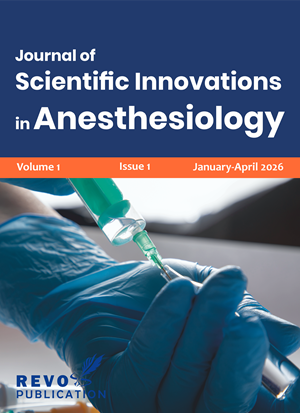 Journal of scientific innovations in anesthesiology
The impact of media on society: a social perspective on demonetization
Our society is reflected through the media, which represents what society is like and how it functions. The sole medium that serves to keep people informed is media, whether it is written, electronic, or on the web. It also serves to amuse, educate, and inform the audience about current events. Our society's voice is now dominated by the media. A number of media platforms have brilliantly stirred the views of the younger generation and other segments of our society. The study's goal is to examine the media's involvement and efficacy throughout the demonetization process. The study's major goals are to look into the role of the media in informing people about the demonetization process and its consequences. The study will contribute to a better understanding of the role of the media in conveying information on significant problems and how individuals learn about current events. In Lucknow's South City and Eldeco neighborhood, a poll of 300 persons was held. The researchers devised a data gathering interview plan that took into account the function and type of media in raising public awareness. The convenience sampling method was used in the research investigation. The study focuses on media consumption patterns and behaviour throughout the demonetization period.
 Dr. amarjeet singh
Sero-prevalence of salmonella typhi antibodies among adult residents of some selected rural communities of abia and enugu states, southeast nigeria: a cross-sectional study
Background: Salmonella typhi (S. typhi) antibodies may be considered as biomarkers of typhoid fever, a severe febrile systemic illness caused by an invasive Gram-negative Bacterium S. typhi. Worldwide, about 21-26.9 million cases of typhoid fever and 200 000-215 000 deaths, occur annually. Between 2003 and 2005, statistics have shown a rising trend in the incidence of typhoid fever in Abia and Enugu States. The aim of the study was to determine the sero-prevalence of S. typhi antibodies in some rural communities of Abia and Enugu States as proxy indicators of prevalence typhoid fever (TF) in the two states. Methods: This was a cross-sectional study of the sero-prevalence of S. typhi antibodies in ten rural communities of Umunneochi Local Government Area (LGA) of Abia State and Ezeagu LGA of Enugu State using 421 (200 in Abia and 221 in Enugu) blood samples for the Widal test to determine the titres of these antibodies. Results: In the Abia communities the mean sero-prevalence of S. typhi antibodies was 68.2%, while in Enugu it was 87.1%. Between the two states, difference in the sero-prevalence of S. typhi antibodies was significant (p=0.03). Conclusions: The sero-prevalence of S. typhi antibodies was higher (87.1%) in the Enugu communities, compared to the Abia communities (68.2%). To reduce the incidence and prevalence of TF in the communities, access to safe domestic water, improved sanitation and good food hygiene needs to be improved. Health-seeking behaviour also needs improvement.
Management of teachers’ soft skills development and flexible learning environment as a correlate of teachers’ effectiveness in unity schools in south-eastern states, nigeria
This study investigated the management of teachers’ soft skills development and flexible learning environment as a correlate of teachers’ effectiveness in Unity schools in South- Eastern states of Nigeria. The correlational research design was adopted for the study. Two research questions were answered while two hypotheses were tested. The population of the study comprised all the 901 teachers of the 14 Unity schools in the 5 South-Eastern states of Nigeria. Stratified and disproportionate sampling techniques were used to select 399 sample size that was determined from the population using the Taro Yamane formula. Two sets of instruments titled; “Management of Seamless Technology Integration Questionnaire” and “Teachers’ Effectiveness Questionnaire” were used for data collection. Face and content validity was ensured by five experts including the researcher’s supervisors. The reliability coefficients of the two instruments were calculated to be 0.79 and 0.81 using Cronbach Alpha method. Multiple and simple regressions were used to answer the research questions. Analysis of variance associated with multiple regression and t-test associated with simple regression was used to test the null hypotheses at 0.05 alpha level. It was found that management of teachers’ soft skills development and flexible learning environment positively correlate (0.92 and 0.86 respectively) to teachers’ effectiveness in Unity schools in the South-Eastern states of Nigeria. Based on the findings, it was concluded that the management of seamless technology integration is positively and highly significant to teachers’ effectiveness in Unity schools in the South-Eastern states of Nigeria. It was therefore recommended among others that school administrators in the 14 Unity schools in the South-Eastern states should immediately embark on self-development in the management of seamless technology integration
 Fxintegrity publishing
Preparation and characterization and biodistribution studies of lomustine loaded plga nanoparticles by interfacial deposition method
The incorporation of lomustine, a hydrophobic anticancer drug into PLGA nanoparticles by interfacial deposition method was optimized. Based on the optimal parameters, it was found that lomustine-PLGA nanoparticles with acceptable properties could be obtained. Optimization of formulation variables to control the size and drug entrapment efficiency of the prepared nanoparticles seems to be based on the same scientific principles as drug-loaded nanoparticles prepared by nanoprecipitation, solvent evaporation method. The process was the most important factor to control the particle size, while both the drug-polymer interaction and the partition of drug in organic and aqueous phases were the crucial factors to govern the drug entrapment efficiency. PLGA concentration at lower level (100 mg), 1:5 organic phase: aqueous ratio, 1%w/v PVA concentration, 3%w/v pluronic F68 achieved smaller particle size. Additionally, L:G ratio of PLGA 75:25, lower volume of organic solvent (1:10 organic phase: aqueous phase), higher initial drug content (10mg) enhanced the drug entrapment efficiency and maintained lomustine concentration in blood for an extended time period, elevated lomustine concentration in lungs and slowed the elimination of lomustine. The biodistribution profiles of prepared nanoparticles in albino mice showed higher plasma drug concentration for longer period of time, elevated drug concentration in lungs and slow elimination from kidney. No toxic effects of prepared nanoparticles were observed in histopathological examination of lungs and kidney. The systematic investigation reported here promises the development of PLGA nanoparticles loaded with lomustine when tested in Lung Cancer cell line L132 and toxicological/ histopathological studies in albino mice.
 Archana mehrotra
Relationship between culture and gender inequality in india
This paper throws light on the role played by culture and traditions specifically of Hindu religion in legitimising the subordinate position of women in Indian society. Along with presenting a brief account on the status of women from ancient times to contemporary situation, the sex-gender binary has also been explored. How a child after his birth socialised to behave in a certain way on the basis of his/her sex has been noted. This process of socialisation is based on the age old customs and traditions which are discriminatory in nature. The male child is taught to be strong, dominating and aggressive in nature and henceforth assigned laborious work to do for managing the finances of house. On the other hand, female child is taught to be sensitive, loving and caring and therefore assigned to manage household work, child nurturing and motherhood related responsibilities.
Methodology to investigate the impact of blindness control activities in the southern indian population
To describe the methodology used to investigate the impact of blindness control activities in the southern Indian State of Andhra Pradesh. The blindness control activities in Andhra Pradesh have been implemented since 1976 through the National Program for Control of Blindness (NPCB) by the Government of India through District Blindness Control Societies (DBCS). Besides Government eye care facilities, many local, national, international Non Governme*ntal Organizations (NGOs) and private sector eye care facilities are active in controlling blindness in the state. In the year 2002 Andhra Pradesh Right to Sight Society (APRTSS) was established as part of a global initiative of VISION 2020 The Right to Sight to coordinate the efforts of various stakeholders in eye care. The present study investigated the impact of blindness control activities in the state of AP in general and with special reference to the activities of APRTSS The study was based on the six building blocks of the health care system for all the stakeholders in eye care. The baseline data for the year 2002-03 were collected from sources such as State Blindness Control Society, District Blindness Control Societies and major stakeholders in eye care in the state and also by questionnaire to managers of eye care facilities and eye care professionals. The current data are being collected for the year 2012-2013. Interviews based on Strength, Weaknesses, Opportunities and Threat (SWOT) analysis were conducted with policy makers in the Government, Managers of the eye care facilities and NGOs. The outcomes of the study will provide information regarding the trends in blinding eye diseases, human resources and infrastructure facilities in the last decade and information on the deficiencies in eye care service delivery that may provide the basis to formulate strategies for implementation of the VISION 2020 program in the state for coming years.
Rice bean (vigna umbellata) the forgotten gold: unraveling the commercial, nutritional and medicinal value
Rice bean (Vigna Umbellata), a traditional crop cultivated across South, Southeast, and East Asia, is characterized by its wild variety spanning the tropical monsoon forest climatic zone. Despite its vast nutritional and production potential, falling within the leguminous family Fabaceae, the rice bean represents one of many underutilized crops. Indigenous to South and Southeast Asian regions, particularly hilly areas, rice bean is cultivated alongside crops like maize, forming an integral part of impoverished farming communities' livelihoods. Despite its extensive utilization in traditional practices, its commercial significance remains largely unrecognized. However, recent attention has been drawn to the rice bean's nutritional richness, bioactive compounds, and various medicinal properties, including anti-inflammatory, antioxidant, and antidiabetic effects. This significant attention underscores its potential for commercialization and contribution to improving the livelihoods of underprivileged populations. Furthermore, its cultivation and processing give rise to diverse products, reflecting its cultural significance and adaptability across different regions.
 Dr. salman ahmed
Classification framework for medical diagnosis of brain tumor with an effective hybrid transfer learning model
Brain tumors (BTs) are deadly diseases that can strike people of every age, all over the world. Every year, thousands of people die of brain tumors. Brain-related diagnoses require caution, and even the smallest error in diagnosis can have negative repercussions. Medical errors in brain tumor diagnosis are common and frequently result in higher patient mortality rates. Magnetic resonance imaging (MRI) is widely used for tumor evaluation and detection. However, MRI generates large amounts of data, making manual segmentation difficult and laborious work, limiting the use of accurate measurements in clinical practice. As a result, automated and dependable segmentation methods are required. Automatic segmentation and early detection of brain tumors are difficult tasks in computer vision due to their high spatial and structural variability. Therefore, early diagnosis or detection and treatment are critical. Various traditional Machine learning (ML) techniques have been used to detect various types of brain tumors. The main issue with these models is that the features were manually extracted. To address the aforementioned insightful issues, this paper presents a hybrid deep transfer learning (GN-AlexNet) model of BT tri-classification (pituitary, meningioma, and glioma). The proposed model combines GoogleNet architecture with the AlexNet model by removing the five layers of GoogleNet and adding ten layers of the AlexNet model, which extracts features and classifies them automatically. On the same CE-MRI dataset, the proposed model was compared to transfer learning techniques (VGG-16, AlexNet, SqeezNet, ResNet, and MobileNet-V2) and ML/DL. The proposed model outperformed the current methods in terms of accuracy and sensitivity (accuracy of 99.51% and sensitivity of 98.90%).
 Mehdhar s. a. m. al-gaashani
Effect of resveratrol on total protein and albumin in type 2 diabetes wound healing in rats
Resveratrol, a polyphenol predominantly present in red grapes, has attracted interest due to its possible health advantages. The anti-inflammatory, antioxidant, and vasodilatory properties of this substance indicate that it may have a beneficial effect on wound healing in individuals with diabetes mellitus. This study aims to determine the role of resveratrol on type 2 diabetic wound healing on total protein and albumin levels in rats. 20 male adult Albino Wistar rats were rendered diabetic using a high-fat diet and an alloxan injection (120 mg/kg). The rats were grouped into four: non-diabetic control group (negative control), diabetic control group (positive control), diabetic treatment group 1 (resveratrol: 10 mg/kg) and diabetic treatment group 2 (resveratrol: 20 mg/kg). Excisional wounds were created and monitored for wound closure over a defined treatment period of 14 days. Studies were conducted and expressed using physical and biochemical indices. The data demonstrated wound healing activities via biochemical indices, and histological and macroscopic methods. There was a difference in fasting blood glucose between the diabetic control group with the treatment groups. There was a difference between the diabetic control group compared to the group treated with resveratrol 10 mg/kg and 20 mg/kg in the weight of the rats. There was no significant acceleration in total albumin and globulin levels in the diabetic wounded group treated with resveratrol (10 mg and 20 mg). The results suggest that resveratrol treatment does not affect on total albumin and globulin levels in diabetic rats.
 Mediterranean journal of pharmacy and pharmaceutical sciences
Motherhood and switch in her leadership styles in parenting during pandemic – with special reference to child with special needs…
A leader is a person, who influences his followers. The role of leader is often associated with managerial concepts, where a leader leads a team of employees, guides them, motivates them and influences them, in such way that the organisational productivity is honed up. A lot emphasis is on the style of leadership, exhibited by the manager, in honing the productivity of the organisation. According to (Hanvey, 2002; Janus, Kopechanski, Cameron, & Hughes, 2007; Morinaka, 2012; Reio & Fornes, 2011), most parents have dreams and hopes about their children and their lives. But, parents of children with special needs, though have, such dreams and hopes, have a harder time meeting these goals. According to Hanvey (2002), these parents need to devote more time and responsibilities, when it comes to raising a child with special needs, like caring for the child’s physical requirements due to his/ her disability, helping them with their physical and social needs and also help them in developing relationships with the others, so that they get a feeling of belongingness. Families with children having special needs undergo a higher level of stress (Gottfried & McGene, 2013). Families that have children with special needs, go through enormous stress levels, at times even financially stressed are they … (Hanvey, 2002; Moriwaka, 2012). But, Current study focusses on the effective leadership role played by a mother during the Pandemic, which is helping the kids, especially the children with special needs in combating the stress, that they are undergoing. A case of a child, diagnosed with autism(a serious behavioural disorder among young children that now occurs at epidemic rates in developing countries like India), since she turned two and how her mother has been helping her adapt to the new normal of staying home for all her activities and coping up with the increased stress levels.
 Nandini
Genera phoenix, castanospermum and cordia: traditional use- biological and phytochemical investigation
The use of plants/herbs as medicine for the care of diseases goes back to time immemorial, and still, plants are the dominant form of medicine in the world. Most of the world's population primarily depends on raw plant products to meet their health care needs. Several drugs include atropine, caffeine, digoxin, ephedrine, quinine, theophylline, tubocurarine, and warfarin. Taxol, vincristine and vinblastin are also derived from plants and used in modern systems of medicine. The authors in this book present comprehensive information about the history of medicinal plants from time immemorial to modern. Besides this, the traditional use and biological and phytochemical investigation of genera Phoenix, Castanospermum and Cordia are included in this book.
Effect of arbuscular mycorrhizal fungi in the management of black bundle disease of maize caused by cephalosporium acremonium
Three species of arbuscular mycorrhizal fungi (Glomus fasiculatum, Glomus mossae and Acaulispora laevis) were used as bio-agents to manage black bundle disease of maize caused by C.acremonium. The results revealed that colonization of arbuscular mycorrhizal fungi in root system of the host reduce the percentage of disease incidenceconsiderably.In the pots inoculated with G. fasiculatum no disease incidence (0.0%) was recorded whereas, in the pots inoculated with A. leavis and G. mossae 16.66 % of disease incidence was recorded and the pots treated with pathogen shows 66.66% of disease incidence compare to control. Among the three bio-agents, Glomus fasiculatumproved to be more effective in managing the disease followed by G.mossae and A. laevis. In addition, all the three AM fungi enhanced the plant growth when they are used alone as inoculum as compared to dual inoculation with the C. acremonium and overall control. This clearly suggests that, AM fungi if used, can serve dual purpose. It can be used as bio-control agent as it shows negative antagonistic interaction soil borne plant pathogens and used as growth promoter because of the ability to supply macro and micro nutrients to the host plants.
 Veerabhadraswamy al
Most Popular Category
- Pharmacy (270)
- Education and social science (224)
- Pharmacology (223)
- Pharmacognosy (178)
- Business management (147)
- Pharmacology and toxicology (134)
- Education and training (131)
- Pharmaceutical sciences (130)
- Medicine (129)
- Research (123)
- Health Science (100)
- Biological Sciences (99)
- Management (98)
- Computer Science (94)
- Public health (91)
- Computer Science Applications (87)
- Human resource management (83)
- Engineering (80)
- Accounting and finance (73)
- Information technology (69)