Effect of weather parameters on seasonal incidence of pod borer complex in pigeonpea
Field experiments were conducted at CCS Haryana Agricultural University, Hisar during kharif season of 2013 and 2014 to determine the effect of weather parameters on the incidence of pod borer complex on early maturing pigeonpea varieties. The study revealed that the infestation of Helicoverpa armigera and Maruca vitrata started with the onset of bud initiation and reached its peak at flowering stage. The maximum H. armigera larval population (1.83 larvae plant-1) was recorded in 1st week of July sown crop, whereas, the maximum incidence of M. vitrata (21.17 webs plant-1) was recorded in 2nd week of July sown crop. The larval population of H. armigera was significantly and positively correlated with the maximum temperature, followed by minimum temperature.Incidence of M. vitrata was negatively correlated with evening relative humidity and wind speed which was significant at p 0.05 level of significance.
 Dr. babu lal jat
Hydatid cholecystitis: a rare and unexpected diagnosis mimicking acute cholecystitis
Hydatidosis is a parasitic zoonosis caused by the larval form of Echinococcus granulosus, endemic in the Mediterranean basin, the Middle East, and South America. [1] While this pathology primarily affects the liver (50-70%) and lungs (20-30%), [2] vesicular localization is exceptionally rare, representing merely 0.1% of all hydatid localizations. [3] This rarity significantly complicates preoperative diagnosis, often leading to intraoperative discovery.
 Karishma
A study to assess the effectiveness of infrared radiation therapy on pain perception and wound healing among primi postnatal women with episiotomy
Motherhood has true nobility and unique capacities. Pregnancy and childbirth are special events in women’s lives. This study aimed to assess the effectiveness of Infra-red radiation therapy on pain perception and wound healing among primi postnatal women with episiotomy in Christian mission hospital, Madurai. The study was conducted among 60 postnatal women, 30 in experimental group and 30 in control group, who were selected by using purposive sampling technique. Data collection was done as planned 6 weeks were taken for data collection procedure. The data gathered were analyzed and the interpretation was made on the study objectives. The paired‘t’ test and independent‘t’ test were used to find out the effectiveness of infrared radiation therapy. Comparison of pain perception and wound healing status values between pre-test and post-test, experimental and control group showed a significant difference at 0.05 levels. The study concluded that the infrared radiation therapy was effective in reducing episiotomy pain and wound healing. Therefore, infra-red radiation therapy should be used to augment the therapy of episiotomy. Keywords: Pain perception, Wound healing, Episiotomy, Infrared lamp
 Elsi queen
Characteristics-centered cryptography with cloud revocation authority and its applications
Identity-based encryption (IBE) is a public key cryptosystem and eliminates the demands of public key infrastructure (PKI) and certificate administration in conventional public key settings. Because of the absence of PKI, the revocation drawback could be a crucial issue in IBE settings. Many rescindable IBE schemes are planned relating to this issue. Quite recently, by embedding associate outsourcing computation technique into IBE, Li et al. planned a rescindable IBE theme with a key-update cloud service supplier (KU-CSP). However, their theme has 2 shortcomings. One is that the computation and communication prices are above previous rescindable IBE schemes. The opposite disadvantage is lack of measurability within the sense that the KU-CSP should keep a secret worth for every user. Within the article, we have a tendency to propose a replacement rescindable IBE theme with a cloud revocation authority (CRA) to resolve the 2 shortcomings, namely, the performance is significantly improved and the CRA holds only a system secret for all the users. For security analysis, we demonstrate that the proposed scheme is semantically secure under the Decisional Bilinear Diffie-Hellman (DBDH) assumption. Finally, we have a tendency to extend the planned rescindable IBE theme to gift a CRA-aided authentication theme with period-limited privileges for managing an outsized range of varied cloud services.
 Dr h shaheen
Simulations of solving a single-player memory card game with several implementations of a human-like thinking computer algorithm
The memory card game is a game that probably everyone played in childhood. The game consists of n pairs of playing cards, whereas each card of a pair is identical. At the beginning of the game, the deck of cards is shuffled and laid face down. In every move of the game, the player flips over two cards. If the cards match, the pair of cards is removed from the game; otherwise, the cards are flipped back over. The game ends when all pairs of cards have been found. The game could be played by one, two, or more players. First, this paper shows an optimal algorithm for solving a single-player memory card game. In the algorithm, we defined four steps where the user needed to remember the earlier shown pairs of cards, which cards were already shown, and the locations of the revealed cards. We marked the memories related to these steps as M1, M2, M3, and M4. Next, we made some simulations as we changed the M1, M2, M3, and M4 memories from no user memory (where the player does not remember the cards or pairs of cards at all) to a perfect user memory (where the player remembers every earlier shown card or pair of cards). With every memory setting, we simulated 1000 gameplays. We recorded how many cards or pairs of cards the player would need to remember and how many moves were required to finish the game. Finally, we evaluated the recorded data, illustrated the results on graphs, and drew some conclusions.
 Ladislav végh
The effect of formaldehyde on the liver of adult male albino rats and possible protective role of vitamin c
Background: Formaldehyde is found in different kinds of medicine and industrial products, cigarette smoke, and even numerous vegetables, fruits and seafood that have been illegally preserved with formalin. The water soluble vitamin C is a strong antioxidant that scavenges free radicals and other reactive nitrogen and oxygen species. Even in small amounts, vitamin C can defend nucleic acids, lipids and proteins against oxidative damage. Objectives: the aim of this study is to elucidate the possible changes that take place in the liver of adult male albino rats after intraperitoneal injection of formaldehyde and the possibility of oral vitamin C’s hepatoprotectivity against it. Design: forty-five adult male albino rats were utilized in this work. These animals were allocated randomly into three main groups. Group I (control groups) included 3 subgroups each contained 9 rats : –ve control received no treatment , +ve control which were injected intraperitoneally by 1 ml of distilled water for 10 days and vit.C +ve control group which received a daily dose of ascorbic acid (100mg/kg bw) dissolved in distilled water by gavage for 10 days. Group ΙΙ: contained 9 rats, which were injected intraperitoneally with a daily dose of formaldehyde (10mg/kg BW) for 10 days. Group IΙΙ: contained 9 rats that were injected intraperitoneally with a daily dose of formaldehyde (10mg/kg BW) concomitantly with daily dose of ascorbic acid (100mg/kg BW) by gavage for 10 days. By the end of the experiment, blood samples were collected for biochemical study of ALT (Alanine aminotransferase), AST (Aspartate aminotransferase) and albumin and all animals were anaesthetized by ether inhalation. Liver specimens were dissected out and weighed then subjected to histopathological, immunohistochemistry, and morphometrical examination. Results: Administration of formaldehyde at a dose of 10 mg/kg caused increase in serum activities of ALT and AST ,but regarding albumin ,it remained unaffected .It caused increase in the liver weights and induced several histopathological changes in the liver of adult male albino rats as congested dilated central veins, portal veins and blood sinusoids with increase in the thickness of the wall of the portal vein. Meanwhile, some hepatic lobules showed multiple necrotic foci around central and portal veins. On the other hand, vit.C partially improved the state of oxidative stress as evidenced by iNOS (inducible nitric oxide synthase) immunohistochemistry. It also reduced the degree of hepatic fibrosis as evidenced by Mallory trichrome histochemical staining. Conclusion: Exposure to formaldehyde led to pronounced hepatic damage which is partially limited by vit.C coadministration. Recommendations: Many special precautions should be taken to limit the occupational and environmental exposure and the level of food and water contamination with formaldehyde and use vit.C as a supplement to limit the toxic effects on the liver.
 Samar mortada mahmoud
Determine the relationship between hypertension and uterine fibroids
Background: Numerous studies have linked uterine fibroids to hypertension, suggesting that this condition may be a risk factor unique to women. These days, fibroids are the main cause of myomectomy and hysterectomy. This study aimed to ascertain the relationship between uterine fibroids and hypertension in Saudi women. Methods: This case-control study was carried out between January 2023 and January 2024 on patients with uterine fibroids and non-uterine fibroids who had an appointment for surgery at the gynecological department of the Maternal and Children Hospital (MCH) Sakaka, Aljouf, Saudi Arabia. Blood pressure readings and fibroid diameters are important factors in studying uterine fibroids. Results: The 140 individuals who were split into 70 cases and 70 control groups had average ages of 41.62±2.16 and 44±1.10. 95 participants had menorrhagia, which was the most common ailment in both groups. In contrast to the controls, the uterine fibroid cases had significantly higher rates of anemia (54.2%), OCP (12.8%), infertility (11.4%), and abortion (37.1%) (P<0.001). 48.5% of uterine fibroids had hypertension, compared to 17.1% of controls (P<0.001).Conclusion: There is a considerable relationship between uterine fibroids and hypertension. Anemia, infertility, and abortion are higher in uterine fibroid cases.
Spatial distribution pattern of lower basic schools for the implementation of lower basic education in rivers state, nigeria
This study examined the spatial distribution pattern of public lower basic schools for the implementation of lower basic education in Rivers State. One research question guided the study. The descriptive survey design was used. The population for the study was the 942 public lower basic schools in Rivers State. Stratified random sampling technique was used to draw the sample size of 289 schools. A handheld Global Positioning System receiver was the instrument used for the study. Nearest neighbour analysis was used to answer the research question. Findings revealed that the overall pattern of distribution of existing public lower basic schools in Rivers State is clustered. Specifically the distribution of schools in Degema and Akuku-Toru Local Government Areas is dispersed with Rn of 1.72 and 1.36 respectively. The pattern of distribution of Bonny, Opobo/Nkoro, Abua/Odual, Port Harcourt, Obio/Akpor and Ikwerre indicates a clustered pattern with Rn of 0.91, 0.83 0.84, 0.74, 0.72 and 0.24 respectively. The study therefore recommended among other things that the state governments should make policies that guide school mapping and ensure their strict compliance. Since school mapping is an integral aspect of micro-planning, every local government should be statutorily required to have a comprehensive school map of its area that should be updated at least every decade. The services of professional planners should be utilized by the Ministry of Education and should also ensure that modern mapping equipment are deployed for this very important exercise.
 Fxintegrity publishing
Iot based smart transport management system
Currently, vehicle to vehicle communication is an important application and thrust area of research. In this paper the author highlighted the workings, executions, implementations and the application of the Internet of Things (IoT) in transport management and vehicle to vehicle communication systems. The main advantage of this Industry 4.0 based IoT technology is that it helps us to reduce road traffic and accidents. The limitations of GPS like accuracy, precision, effective analysis, etc. has led to the evolution of Mobile based V2V communication which is more effective, error proof, result oriented and smart. For proper analysis of traffic vehicle to vehicle communication is established. Random Data from vehicles taken by numerous sensors. Any car coming in its variety could effortlessly share the data by either of two cars nearby. With the help of vehicle to vehicle communication we can provide a path of emergency vehicles to reach the destination quickly. Based on the V2V application, Red and Green signals can be marked on the path as per traffic density and the emergency vehicle can take the shortest, fastest and low density route. Similar such examples are elaborated in the current research manuscript that will help the researcher in effectively finding the research gap for further advancement, analysis, innovation and optimization.
 Vartika agarwal
Pattern of drug prescribed and drug related problems among hospitalized elderly patients
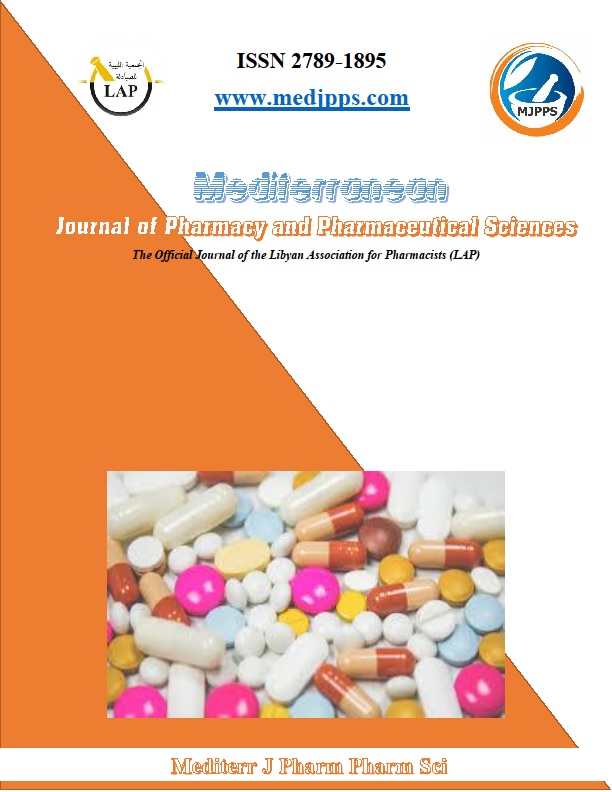
Prescribing drugs for elderly patients is not an easy task since elderly patients are frequently with comorbid conditions. In Libya, there are no guidelines for the management of medications used in elderly patients and no specialized geriatric health institutions. The aim of this study is to assess the pattern of medication use among hospitalized elderly patients in Sebha Medical Centre and the drug-related problems associated with these patterns. This report is descriptive and retrospective cross-sectional study that is conducted at Sebha Medical Center during 2021. Potential drug-related problems were assessed based on the classification of Hepler and Strand. In this study, out of 195 participants, most of the patients have been given antibiotics (92%). The majority of patients have been prescribed anti-gastric agents, vitamins and anti-thrombotic agents which accounted for 75%, 62% and 55%, respectively. To less extent, anti-hypertensive agents, analgesics and anti-hyperlipidemics were reported by 45%, 43% and 38%, correspondently. Almost all the patients have at least one event of drug-related problem and more than three-quarters of the patients had more than one event of drug-related problems. The highest rate was untreated indications which were reported for 77% then followed by drug use without indication nearly a half of the events 48%. To fewer extent rates were reported: “in improper drug selection”, “drug interaction” and “adverse effects” which were reported for 25%, 23% and 18% of the total events, respectively. Almost all elderly patients have been prescribed antibiotics, analgesics and vitamins. Drug-related problems are predominant prevalent in the clinical practice at the center. This study highlights the importance of activation of clinical pharmacist interventions at hospitals which can contribute to reducing the chance of risk of drug-related problems events among hospitalized elderly patients and ensuring rational drug prescribing in the geriatric clinical settings.
 Mediterranean journal of pharmacy and pharmaceutical sciences
Design of english corner extracurricular activities in the 4.0 industrial revolution era at madrasah ibtida'iyah
English Corner extracurricular activities are one of the choices for students to be able to learn English with more fun. Through the English Corner extracurricular program, the Madrasah provides provisions for its students to face the era of the industrial revolution 4.0. The purpose of this research is to add insight and to know the mechanism of the English corner extracurricular through the development, implementation, assessment, and evaluation of the English corner extracurricular in the 4.0 revolution era at MI Roudlotul Ulum Banyuwangi. This type of research is qualitative research with a descriptive design. Data collection techniques using interviews, observation, and documentation. Data analysis used the concept of Miles and Huberman. The validity of the data was measured by means of triangulation of sources and techniques. The results showed that 1). The development of the English corner extracurricular in facing the 4.0 industrial revolution pays attention to human resources, needs, infrastructure, talents, and interests. 2). The implementation of the English corner extracurricular is almost the same as learning in general and is made more relaxed so that it is more comfortable in its implementation. 3). This English corner extracurricular assessment uses a written manual assessment, after which it is recapitulated and entered into the Digital Report Card Application (ARD). 4). This English corner extracurricular evaluation is carried out every six months or at the end of the semester, taking into account the development and implementation that was carried out in the previous semester.
 Educare: journal of primary education
Pharmacy student’s view about covid-19 vaccination in libya
Vaccination hesitation may affect the national efforts to slow down the spread of coronavirus among the population. This study was aimed to explore the views of final year pharmacy students at Faculty of Pharmacy, Elmergib University, Al kums, Libya towards COVID-19 vaccination. The study was conducted before the vaccine becomes available in Libya. A semi-structured questionnaire was distributed on March 14, 2021 to the fourth- year pharmacy students at Elmergib University, Al khums Libya. Results showed a high degree of hesitancy towards vaccination against this virus (52.6%). Student's participants who said they would take the vaccine probably have said that because of their stress that caused by COVID-19 pandemic (47.4%). With regard to the gender, the participants’ views had no significant difference between male and female students on whether to take the vaccine or not (P = 0.825). In conclusion, hesitations towards vaccination and stress caused by student fear from the virus need to be addressed to minimize public reluctant to take the vaccine and to improve the education process during the pandemic.
Mediterranean journal of pharmacy and pharmaceutical sciences
Affective tendencies in embarrassing situations and academic cheating behavior
The purpose of this research was to investigate the relationship between affective tendencies in embarrassing situations and cheating behavior in a sample of adolescents. Two objectives were addressed: first, exploring the relationship between cheating behavior and shame-proneness, guilt-proneness, externalization, and detachment; second, analyzing the mediating role of detachment in the relationship between externalization and cheating behavior. The results showed positive correlations between the cheating behavior and externalization and detachment, a negative correlation with guilt, and no relation with shame. It was confirmed the mediating role of detachment. Implications for educators were discussed, emphasizing the importance of stimulation of students’ moral rules understanding.
Comparing machine learning classification models on a loan approval prediction dataset
In the last decade, we have observed the usage of artificial intelligence algorithms and machine learning models in industry, education, healthcare, entertainment, and several other areas. In this paper, we focus on using machine learning algorithms in the loan approval process of financial institutions. First, we briefly review some prior research papers that dealt with loan approval predictions using machine learning models. Next, we analyze the loan approval prediction dataset we downloaded from Kaggle, which was used in this paper to compare several machine learning classification models. During this analysis, we observed that credit scores and loan terms are the attributes that probably most affect the result. Next, we divided the dataset into a training set (80%) and a test set (20%). We trained 27 various machine learning models in MATLAB. Three models were optimized with Bayesian optimization to find the best hyperparameters with minimum error. We used 5-fold cross-validation for the validations to prevent overfitting during the training. In the following step, we used the test set on trained models to measure the models' accuracy on unseen data. The result showed that the best accuracy both on validation and test data, more than 98%, was reached with neural networks and ensemble classification models.
Effects of fluoride on tissue respiratory metabolism of fresh water crab, barytelphusa species
Fresh water crab was exposed in fluoride water at 96h the rate of oxygen uptake was higher in gills followed by hepatopancreas and muscle. On exposure to fluoride water, tissue respiratory rates decreased, effect on gill tissue appeared to be more pronounced than other tissues under the study. The rate of oxygen uptake in male was higher tha control animal. Rate of oxygen consumption showed a significant decrease in both sexes with increase in duration of exposure to fluoride.
 .vijay digambar suryawanshi
A study of beliefs of teacher educators about relationship between teaching and research
The purpose of this study is to explore the belief of teacher educators about the relationship between teaching and research. Keeping in view the role of the teacher educators, a survey was done. The beliefs of teacher educators were explored with the help of an opinionaire. The collected data were analyzed through qualitative method of analysis. It was found that the secondary teacher educators were positive about the need of research with a little dilemma between teaching and research.
 Rupal mankad
Implementasi reward dan punishment dalam membentuk karakter disiplin peserta didik di madrasah ibtidaiyah al-hidayah jember
Giving stimulus from educators in the form of giving appreciation and punishment will greatly affect the way of thinking and behavior of students in achieving the goals of character education that have been set. This study aims to describe the implementation of reward and punishment in shaping the character of students' discipline. This research uses a qualitative approach with the type of case study. Methods of data collection using interviews, observation and documentation. The validity of the data used source triangulation and technical triangulation. The results of this study indicate: (1) The implementation of rewards in shaping the discipline character of students is done by giving rewards in the form of praise and giving appreciation in the form of gifts. (2) The implementation of punishment in shaping the disciplinary character of students is carried out by giving gradual warnings, giving spontaneous warnings and written warning letters. (3) Evaluation of the implementation of rewards and punishments in shaping the character of students' discipline is using process evaluation, which is an assessment carried out during the learning process by observing the attitudes of students everyday when they are in the madrasa environment.. Pemberian stimulus dari pendidik berupa pemberian apresiasi dan hukuman akan sangat mempengaruhi cara berpikir dan tingkah laku peserta didik dalam mencapai tujuan pendidikan karakter yang sudah ditetapkan. Penelitian ini bertujuan untuk mendeskripsikan implementasi reward dan punishment dalam membentuk karakter disiplin peserta didik. Penelitian ini menggunakan pendekatan kualitatif dengan jenis studi kasus. Metode pengumpulan data menggunakan wawancara, observasi dan dokumentasi. Keabsahan data menggunakan triangulasi sumber dan triangulasi tehnik. Hasil penelitian ini menunjukkan: (1) Implementasi reward dalam membentuk karakter kedisiplinan peserta didik dilakukan dengan memberikan reward dalam bentuk pujian serta memberikan apresiasi dalam bentuk hadiah. (2) Implementasi punishment dalam membentuk karakter kedisiplinan peserta didik dilakukan dengan cara memberi peringatan secara bertahap, memberi teguran spontan dan surat peringatan tertulis. (3) Evaluasi implementasi reward dan punishment dalam membentuk karakter kedisiplinan peserta didik adalah menggunakan evaluasi proses, yaitu penilaian yang dilakukan di saat proses pembelajaran berlangsung dengan mengamati dari sikap peserta didik sehari-hari ketika berada di lingkungan madrasah.
The impact of media on society: a social perspective on demonetization
Our society is reflected through the media, which represents what society is like and how it functions. The sole medium that serves to keep people informed is media, whether it is written, electronic, or on the web. It also serves to amuse, educate, and inform the audience about current events. Our society's voice is now dominated by the media. A number of media platforms have brilliantly stirred the views of the younger generation and other segments of our society. The study's goal is to examine the media's involvement and efficacy throughout the demonetization process. The study's major goals are to look into the role of the media in informing people about the demonetization process and its consequences. The study will contribute to a better understanding of the role of the media in conveying information on significant problems and how individuals learn about current events. In Lucknow's South City and Eldeco neighborhood, a poll of 300 persons was held. The researchers devised a data gathering interview plan that took into account the function and type of media in raising public awareness. The convenience sampling method was used in the research investigation. The study focuses on media consumption patterns and behaviour throughout the demonetization period.
 Dr. amarjeet singh
Marketing management in business
There is a close relationship between a marketing strategy and its ability to realise its mission, vision, and business strategy. A case in point is the Nike brand that focuses on creating meaningful stories for its loyal fan base. It achieves this by inducing emotions into the customer base through "emotional branding" to realise its vision of expanding human potential by creating groundbreaking sports innovations. Nike's marketing campaign strategy involves building meaningful stories and tag lines using a traditional narrative of a hero who overcomes every challenge brought forth through its slogan of "Just Do It." The brand also has a distribution strategy of using subsidiaries like Converse, Jordan, and Hurley and channels like retailers, e-commerce, and supermarkets to reach out to millions of its customers (Mahdi, Abbas, Mazar, & George, 2015). To achieve its mission of bringing innovation and inspiration to every athlete globally, the brand has invested in top-notch technologies like hyper-adapt as part of a marketing strategy.
 Zamzam abdelazim
Assessing nutritional needs of oncology patients undergoing chemotherapy at bhagwan mahaveer cancer hospital & research centre, jaipur: development of an educational booklet
Background: Cancer is the word used for a tumor that spreads & destroys the host and is one of the leading causes of morbidity and mortality in developed and developing countries. Good nutrition is important for good health. Methods: Non-experimental descriptive research design was adopted for a study to assess knowledge on meeting nutritional needs among 100 oncology patients receiving chemotherapy at Bhagwan Mahaveer Cancer Hospital & Research Centre, Jaipur. Sample selection using a non-probability convenient sampling technique. Data were collected through a self-developed structured knowledge questionnaire. Results: Our results revealed that the majority of cancer patients, 43%, were in the age group of 31-40 years, 39% had no formal education, 32% had secondary education, and 17% had primary education. 76% were males, 24% were female, and 87% of participants did not have a family history of cancer. 55.23% of patients reported that nurses did counselling. The majority (67%) of respondents reported that they had previous information on meeting nutritional needs through diet counselling, and 33% reported they didn’t have any information about meeting nutritional needs. Most (45%) of cancer patients had poor knowledge, 26% had average knowledge, and 29% had good knowledge scoring. Conclusion:Conclusion:Conclusion:Conclusion:Conclusion:Conclusion:Conclusion:Conclusion:Conclusion:Conclusion:Conclusion: We concluded that results show most (45%) of oncology patients receiving chemotherapy had poor knowledge We concluded that results show most (45%) of oncology patients receiving chemotherapy had poor knowledge We concluded that results show most (45%) of oncology patients receiving chemotherapy had poor knowledge We concluded that results show most (45%) of oncology patients receiving chemotherapy had poor knowledge We concluded that results show most (45%) of oncology patients receiving chemotherapy had poor knowledge We concluded that results show most (45%) of oncology patients receiving chemotherapy had poor knowledge We concluded that results show most (45%) of oncology patients receiving chemotherapy had poor knowledge We concluded that results show most (45%) of oncology patients receiving chemotherapy had poor knowledge We concluded that results show most (45%) of oncology patients receiving chemotherapy had poor knowledge We concluded that results show most (45%) of oncology patients receiving chemotherapy had poor knowledge We concluded that results show most (45%) of oncology patients receiving chemotherapy had poor knowledge We concluded that results show most (45%) of oncology patients receiving chemotherapy had poor knowledge We concluded that results show most (45%) of oncology patients receiving chemotherapy had poor knowledge We concluded that results show most (45%) of oncology patients receiving chemotherapy had poor knowledge We concluded that results show most (45%) of oncology patients receiving chemotherapy had poor knowledge We concluded that results show most (45%) of oncology patients receiving chemotherapy had poor knowledge We concluded that results show most (45%) of oncology patients receiving chemotherapy had poor knowledge We concluded that results show most (45%) of oncology patients receiving chemotherapy had poor knowledge We concluded that results show most (45%) of oncology patients receiving chemotherapy had poor knowledge We concluded that results show most (45%) of oncology patients receiving chemotherapy had poor knowledge We concluded that results show most (45%) of oncology patients receiving chemotherapy had poor knowledge We concluded that results show most (45%) of oncology patients receiving chemotherapy had poor knowledge We concluded that results show most (45%) of oncology patients receiving chemotherapy had poor knowledge We concluded that results show most (45%) of oncology patients receiving chemotherapy had poor knowledge We concluded that results show most (45%) of oncology patients receiving chemotherapy had poor knowledge We concluded that results show most (45%) of oncology patients receiving chemotherapy had poor knowledge We concluded that results show most (45%) of oncology patients receiving chemotherapy had poor knowledge We concluded that results show most (45%) of oncology patients receiving chemotherapy had poor knowledge We concluded that results show most (45%) of oncology patients receiving chemotherapy had poor knowledge We concluded that results show most (45%) of oncology patients receiving chemotherapy had poor knowledge We concluded that results show most (45%) of oncology patients receiving chemotherapy had poor knowledge We concluded that results show most (45%) of oncology patients receiving chemotherapy had poor knowledge We concluded that results show most (45%) of oncology patients receiving chemotherapy had poor knowledge We concluded that results show most (45%) of oncology patients receiving chemotherapy had poor knowledge We concluded that results show most (45%) of oncology patients receiving chemotherapy had poor knowledge We concluded that results show most (45%) of oncology patients receiving chemotherapy had poor knowledge We concluded that results show most (45%) of oncology patients receiving chemotherapy had poor knowledge We concluded that results show most (45%) of oncology patients receiving chemotherapy had poor knowledge We concluded that results show most (45%) of oncology patients receiving chemotherapy had poor knowledge We concluded that results show most (45%) of oncology patients receiving chemotherapy had poor knowledge We concluded that results show most (45%) of oncology patients receiving chemotherapy had poor knowledge We concluded that results show most (45%) of oncology patients receiving chemotherapy had poor knowledge We concluded that results show most (45%) of oncology patients receiving chemotherapy had poor knowledge We concluded that results show most (45%) of oncology patients receiving chemotherapy had poor knowledge We concluded that results show most (45%) of oncology patients receiving chemotherapy had poor knowledge We concluded that results show most (45%) of oncology patients receiving chemotherapy had poor knowledge We concluded that results show most (45%) of oncology patients receiving chemotherapy had poor knowledge We concluded that results show most (45%) of oncology patients receiving chemotherapy had poor knowledge We concluded that results show most (45%) of oncology patients receiving chemotherapy had poor knowledge We concluded that results show most (45%) of oncology patients receiving chemotherapy had poor knowledge We concluded that results show most (45%) of oncology patients receiving chemotherapy had poor knowledge We concluded that results show most (45%) of oncology patients receiving chemotherapy had poor knowledge We concluded that results show most (45%) of oncology patients receiving chemotherapy had poor knowledge We concluded that results show most (45%) of oncology patients receiving chemotherapy had poor knowledge We concluded that results show most (45%) of oncology patients receiving chemotherapy had poor knowledge We concluded that results show most (45%) of oncology patients receiving chemotherapy had poor knowledge We concluded that results show most (45%) of oncology patients receiving chemotherapy had poor knowledge We concluded that results show most (45%) of oncology patients receiving chemotherapy had poor knowledge We concluded that results show most (45%) of oncology patients receiving chemotherapy had poor knowledge We concluded that results show most (45%) of oncology patients receiving chemotherapy had poor knowledge We concluded that results show most (45%) of oncology patients receiving chemotherapy had poor knowledge We concluded that results show most (45%) of oncology patients receiving chemotherapy had poor knowledge We concluded that results show most (45%) of oncology patients receiving chemotherapy had poor knowledge We concluded that results show most (45%) of oncology patients receiving chemotherapy had poor knowledge We concluded that results show most (45%) of oncology patients receiving chemotherapy had poor knowledge We concluded that results show most (45%) of oncology patients receiving chemotherapy had poor knowledge We concluded that results show most (45%) of oncology patients receiving chemotherapy had poor knowledge We concluded that results show most (45%) of oncology patients receiving chemotherapy had poor knowledge We concluded that results show most (45%) of oncology patients receiving chemotherapy had poor knowledge We concluded that results show most (45%) of oncology patients receiving chemotherapy had poor knowledge We concluded that results show most (45%) of oncology patients receiving chemotherapy had poor knowledge We concluded that results show most (45%) of oncology patients receiving chemotherapy had poor knowledge We concluded that results show most (45%) of oncology patients receiving chemotherapy had poor knowledge We concluded that results show most (45%) of oncology patients receiving chemotherapy had poor knowledge We concluded that results show most (45%) of oncology patients receiving chemotherapy had poor knowledge We concluded that results show most (45%) of oncology patients receiving chemotherapy had poor knowledge We concluded that results show most (45%) of oncology patients receiving chemotherapy had poor knowledge We concluded that results show most (45%) of oncology patients receiving chemotherapy had poor knowledge We concluded that results show most (45%) of oncology patients receiving chemotherapy had poor knowledge We concluded that results show most (45%) of oncology patients receiving chemotherapy had poor knowledge We concluded that results show most (45%) of oncology patients receiving chemotherapy had poor knowledge We concluded that results show most (45%) of oncology patients receiving chemotherapy had poor knowledge We concluded that results show most (45%) of oncology patients receiving chemotherapy had poor knowledge We concluded that results show most (45%) of oncology patients receiving chemotherapy had poor knowledge We concluded that results show most (45%) of oncology patients receiving chemotherapy had poor knowledge meeting nutritionmeeting nutrition meeting nutrition meeting nutrition meeting nutritionmeeting nutrition meeting nutrition meeting nutritionmeeting nutritionmeeting nutritionmeeting nutritionmeeting nutritional needs during chemotherapy. However, the researcher developed an information booklet, and he hopes that al needs during chemotherapy. However, the researcher developed an information booklet, and he hopes that al needs during chemotherapy. However, the researcher developed an information booklet, and he hopes that al needs during chemotherapy. However, the researcher developed an information booklet, and he hopes that al needs during chemotherapy. However, the researcher developed an information booklet, and he hopes that al needs during chemotherapy. However, the researcher developed an information booklet, and he hopes that al needs during chemotherapy. However, the researcher developed an information booklet, and he hopes that al needs during chemotherapy. However, the researcher developed an information booklet, and he hopes that al needs during chemotherapy. However, the researcher developed an information booklet, and he hopes that al needs during chemotherapy. However, the researcher developed an information booklet, and he hopes that al needs during chemotherapy. However, the researcher developed an information booklet, and he hopes that al needs during chemotherapy. However, the researcher developed an information booklet, and he hopes that al needs during chemotherapy. However, the researcher developed an information booklet, and he hopes that al needs during chemotherapy. However, the researcher developed an information booklet, and he hopes that al needs during chemotherapy. However, the researcher developed an information booklet, and he hopes that al needs during chemotherapy. However, the researcher developed an information booklet, and he hopes that al needs during chemotherapy. However, the researcher developed an information booklet, and he hopes that al needs during chemotherapy. However, the researcher developed an information booklet, and he hopes that al needs during chemotherapy. However, the researcher developed an information booklet, and he hopes that al needs during chemotherapy. However, the researcher developed an information booklet, and he hopes that al needs during chemotherapy. However, the researcher developed an information booklet, and he hopes that al needs during chemotherapy. However, the researcher developed an information booklet, and he hopes that al needs during chemotherapy. However, the researcher developed an information booklet, and he hopes that al needs during chemotherapy. However, the researcher developed an information booklet, and he hopes that al needs during chemotherapy. However, the researcher developed an information booklet, and he hopes that al needs during chemotherapy. However, the researcher developed an information booklet, and he hopes that al needs during chemotherapy. However, the researcher developed an information booklet, and he hopes that al needs during chemotherapy. However, the researcher developed an information booklet, and he hopes that al needs during chemotherapy. However, the researcher developed an information booklet, and he hopes that al needs during chemotherapy. However, the researcher developed an information booklet, and he hopes that al needs during chemotherapy. However, the researcher developed an information booklet, and he hopes that al needs during chemotherapy. However, the researcher developed an information booklet, and he hopes that al needs during chemotherapy. However, the researcher developed an information booklet, and he hopes that al needs during chemotherapy. However, the researcher developed an information booklet, and he hopes that al needs during chemotherapy. However, the researcher developed an information booklet, and he hopes that al needs during chemotherapy. However, the researcher developed an information booklet, and he hopes that al needs during chemotherapy. However, the researcher developed an information booklet, and he hopes that al needs during chemotherapy. However, the researcher developed an information booklet, and he hopes that al needs during chemotherapy. However, the researcher developed an information booklet, and he hopes that al needs during chemotherapy. However, the researcher developed an information booklet, and he hopes that al needs during chemotherapy. However, the researcher developed an information booklet, and he hopes that al needs during chemotherapy. However, the researcher developed an information booklet, and he hopes that al needs during chemotherapy. However, the researcher developed an information booklet, and he hopes that al needs during chemotherapy. However, the researcher developed an information booklet, and he hopes that al needs during chemotherapy. However, the researcher developed an information booklet, and he hopes that al needs during chemotherapy. However, the researcher developed an information booklet, and he hopes that al needs during chemotherapy. However, the researcher developed an information booklet, and he hopes that al needs during chemotherapy. However, the researcher developed an information booklet, and he hopes that al needs during chemotherapy. However, the researcher developed an information booklet, and he hopes that al needs during chemotherapy. However, the researcher developed an information booklet, and he hopes that al needs during chemotherapy. However, the researcher developed an information booklet, and he hopes that al needs during chemotherapy. However, the researcher developed an information booklet, and he hopes that al needs during chemotherapy. However, the researcher developed an information booklet, and he hopes that al needs during chemotherapy. However, the researcher developed an information booklet, and he hopes that al needs during chemotherapy. However, the researcher developed an information booklet, and he hopes that al needs during chemotherapy. However, the researcher developed an information booklet, and he hopes that al needs during chemotherapy. However, the researcher developed an information booklet, and he hopes that al needs during chemotherapy. However, the researcher developed an information booklet, and he hopes that al needs during chemotherapy. However, the researcher developed an information booklet, and he hopes that al needs during chemotherapy. However, the researcher developed an information booklet, and he hopes that al needs during chemotherapy. However, the researcher developed an information booklet, and he hopes that al needs during chemotherapy. However, the researcher developed an information booklet, and he hopes that al needs during chemotherapy. However, the researcher developed an information booklet, and he hopes that al needs during chemotherapy. However, the researcher developed an information booklet, and he hopes that al needs during chemotherapy. However, the researcher developed an information booklet, and he hopes that al needs during chemotherapy. However, the researcher developed an information booklet, and he hopes that al needs during chemotherapy. However, the researcher developed an information booklet, and he hopes that al needs during chemotherapy. However, the researcher developed an information booklet, and he hopes that al needs during chemotherapy. However, the researcher developed an information booklet, and he hopes that al needs during chemotherapy. However, the researcher developed an information booklet, and he hopes that al needs during chemotherapy. However, the researcher developed an information booklet, and he hopes that al needs during chemotherapy. However, the researcher developed an information booklet, and he hopes that al needs during chemotherapy. However, the researcher developed an information booklet, and he hopes that al needs during chemotherapy. However, the researcher developed an information booklet, and he hopes that the booklet will surely enhance oncology patient’s knowledge of meeting nutritional needs during chemotherapy the booklet will surely enhance oncology patient’s knowledge of meeting nutritional needs during chemotherapy the booklet will surely enhance oncology patient’s knowledge of meeting nutritional needs during chemotherapy the booklet will surely enhance oncology patient’s knowledge of meeting nutritional needs during chemotherapy the booklet will surely enhance oncology patient’s knowledge of meeting nutritional needs during chemotherapy the booklet will surely enhance oncology patient’s knowledge of meeting nutritional needs during chemotherapy the booklet will surely enhance oncology patient’s knowledge of meeting nutritional needs during chemotherapy the booklet will surely enhance oncology patient’s knowledge of meeting nutritional needs during chemotherapy the booklet will surely enhance oncology patient’s knowledge of meeting nutritional needs during chemotherapy the booklet will surely enhance oncology patient’s knowledge of meeting nutritional needs during chemotherapy the booklet will surely enhance oncology patient’s knowledge of meeting nutritional needs during chemotherapy the booklet will surely enhance oncology patient’s knowledge of meeting nutritional needs during chemotherapy the booklet will surely enhance oncology patient’s knowledge of meeting nutritional needs during chemotherapy the booklet will surely enhance oncology patient’s knowledge of meeting nutritional needs during chemotherapy the booklet will surely enhance oncology patient’s knowledge of meeting nutritional needs during chemotherapy the booklet will surely enhance oncology patient’s knowledge of meeting nutritional needs during chemotherapy the booklet will surely enhance oncology patient’s knowledge of meeting nutritional needs during chemotherapy the booklet will surely enhance oncology patient’s knowledge of meeting nutritional needs during chemotherapy the booklet will surely enhance oncology patient’s knowledge of meeting nutritional needs during chemotherapy the booklet will surely enhance oncology patient’s knowledge of meeting nutritional needs during chemotherapy the booklet will surely enhance oncology patient’s knowledge of meeting nutritional needs during chemotherapy the booklet will surely enhance oncology patient’s knowledge of meeting nutritional needs during chemotherapy the booklet will surely enhance oncology patient’s knowledge of meeting nutritional needs during chemotherapy the booklet will surely enhance oncology patient’s knowledge of meeting nutritional needs during chemotherapy the booklet will surely enhance oncology patient’s knowledge of meeting nutritional needs during chemotherapy the booklet will surely enhance oncology patient’s knowledge of meeting nutritional needs during chemotherapy the booklet will surely enhance oncology patient’s knowledge of meeting nutritional needs during chemotherapy the booklet will surely enhance oncology patient’s knowledge of meeting nutritional needs during chemotherapy the booklet will surely enhance oncology patient’s knowledge of meeting nutritional needs during chemotherapy the booklet will surely enhance oncology patient’s knowledge of meeting nutritional needs during chemotherapy the booklet will surely enhance oncology patient’s knowledge of meeting nutritional needs during chemotherapy the booklet will surely enhance oncology patient’s knowledge of meeting nutritional needs during chemotherapy the booklet will surely enhance oncology patient’s knowledge of meeting nutritional needs during chemotherapy the booklet will surely enhance oncology patient’s knowledge of meeting nutritional needs during chemotherapy the booklet will surely enhance oncology patient’s knowledge of meeting nutritional needs during chemotherapy the booklet will surely enhance oncology patient’s knowledge of meeting nutritional needs during chemotherapy the booklet will surely enhance oncology patient’s knowledge of meeting nutritional needs during chemotherapy the booklet will surely enhance oncology patient’s knowledge of meeting nutritional needs during chemotherapy the booklet will surely enhance oncology patient’s knowledge of meeting nutritional needs during chemotherapy the booklet will surely enhance oncology patient’s knowledge of meeting nutritional needs during chemotherapy the booklet will surely enhance oncology patient’s knowledge of meeting nutritional needs during chemotherapy the booklet will surely enhance oncology patient’s knowledge of meeting nutritional needs during chemotherapy the booklet will surely enhance oncology patient’s knowledge of meeting nutritional needs during chemotherapy the booklet will surely enhance oncology patient’s knowledge of meeting nutritional needs during chemotherapy the booklet will surely enhance oncology patient’s knowledge of meeting nutritional needs during chemotherapy the booklet will surely enhance oncology patient’s knowledge of meeting nutritional needs during chemotherapy the booklet will surely enhance oncology patient’s knowledge of meeting nutritional needs during chemotherapy the booklet will surely enhance oncology patient’s knowledge of meeting nutritional needs during chemotherapy the booklet will surely enhance oncology patient’s knowledge of meeting nutritional needs during chemotherapy the booklet will surely enhance oncology patient’s knowledge of meeting nutritional needs during chemotherapy the booklet will surely enhance oncology patient’s knowledge of meeting nutritional needs during chemotherapy the booklet will surely enhance oncology patient’s knowledge of meeting nutritional needs during chemotherapy the booklet will surely enhance oncology patient’s knowledge of meeting nutritional needs during chemotherapy the booklet will surely enhance oncology patient’s knowledge of meeting nutritional needs during chemotherapy the booklet will surely enhance oncology patient’s knowledge of meeting nutritional needs during chemotherapy the booklet will surely enhance oncology patient’s knowledge of meeting nutritional needs during chemotherapy the booklet will surely enhance oncology patient’s knowledge of meeting nutritional needs during chemotherapy the booklet will surely enhance oncology patient’s knowledge of meeting nutritional needs during chemotherapy the booklet will surely enhance oncology patient’s knowledge of meeting nutritional needs during chemotherapy the booklet will surely enhance oncology patient’s knowledge of meeting nutritional needs during chemotherapy the booklet will surely enhance oncology patient’s knowledge of meeting nutritional needs during chemotherapy the booklet will surely enhance oncology patient’s knowledge of meeting nutritional needs during chemotherapy the booklet will surely enhance oncology patient’s knowledge of meeting nutritional needs during chemotherapy the booklet will surely enhance oncology patient’s knowledge of meeting nutritional needs during chemotherapy the booklet will surely enhance oncology patient’s knowledge of meeting nutritional needs during chemotherapy the booklet will surely enhance oncology patient’s knowledge of meeting nutritional needs during chemotherapy the booklet will surely enhance oncology patient’s knowledge of meeting nutritional needs during chemotherapy the booklet will surely enhance oncology patient’s knowledge of meeting nutritional needs during chemotherapy the booklet will surely enhance oncology patient’s knowledge of meeting nutritional needs during chemotherapy the booklet will surely enhance oncology patient’s knowledge of meeting nutritional needs during chemotherapy the booklet will surely enhance oncology patient’s knowledge of meeting nutritional needs during chemotherapy the booklet will surely enhance oncology patient’s knowledge of meeting nutritional needs during chemotherapy the booklet will surely enhance oncology patient’s knowledge of meeting nutritional needs during chemotherapy the booklet will surely enhance oncology patient’s knowledge of meeting nutritional needs during chemotherapy the booklet will surely enhance oncology patient’s knowledge of meeting nutritional needs during chemotherapy the booklet will surely enhance oncology patient’s knowledge of meeting nutritional needs during chemotherapy the booklet will surely enhance oncology patient’s knowledge of meeting nutritional needs during chemotherapy the booklet will surely enhance oncology patient’s knowledge of meeting nutritional needs during chemotherapy the booklet will surely enhance oncology patient’s knowledge of meeting nutritional needs during chemotherapy the booklet will surely enhance oncology patient’s knowledge of meeting nutritional needs during chemotherapy the booklet will surely enhance oncology patient’s knowledge of meeting nutritional needs during chemotherapy .
 Dr k c yadav
Most Popular Category
- Pharmacy (270)
- Education and social science (224)
- Pharmacology (223)
- Pharmacognosy (178)
- Business management (147)
- Pharmacology and toxicology (134)
- Education and training (131)
- Pharmaceutical sciences (130)
- Medicine (129)
- Research (123)
- Health Science (100)
- Biological Sciences (99)
- Management (98)
- Computer Science (94)
- Public health (91)
- Computer Science Applications (87)
- Human resource management (83)
- Engineering (80)
- Accounting and finance (73)
- Information technology (69)