Molecular changes in invasive front of oral cancer
Treatment planning for oral squamous cell carcinoma (OSCC) is based on the clinical TNM (Tumor, Node and Metastasis) classification. This system operates on the assumption that small tumours without clinical spread have a better prognosis than larger tumours with metastases. However, it is a well-known fact that some tumours with the same clinical staging show different growth patterns and clinical behaviour. This makes the prognosis for patients with OSCC difficult to predict on the basis of clinical staging alone. Although many histopathological characteristics of OSCC have been identified as prognostic factors, none is believed to be completely infallible. Therefore, a great need exists for more reliable prognostic markers, which will assist in treatment decisions. It is now well documented that several molecular events of significance for tumour spread, such as gain and loss of adhesion molecules, secretion of proteolytic enzymes, increased cell proliferation and initiation of angiogenesis occur at the tumour–host interface or invasive front, where the deepest and presumably most aggressive cells reside. This review describes the various molecular events and interactions, which take place in the invasive front of the OSCC, and elucidates their role as prognostic markers.
 Mohit sharma
Project management - tesco plc's operation
In this report, Tesco PLC's operation and project management have been fully elaborated on. Tesco PLC is a retail organization that deals with retailing and other related activities in insurance service and retail banking (REUTERS, 2020). Tesco is multinational general merchandise and groceries with headquarters at Welwyn Garden City in England. Based on gross revenue rating, Tesco is the third-largest retailer in the world. Tesco was created by Jack Cohen in 1919 in Hackney, London as a set of markets stalls. Tesco developed and expanded very fast in the whole world and above 100 Tesco shops in the entire Facebook. Tesco has segments in ROI and the UK that is; central Europe (Hungary, Slovakia, and the Czech Republic), the Republic of Ireland, and the United Kingdom which do similar activities to those done in Tesco bank in the United Kingdom (Bedford, 2022). Tesco avails different personal banking packages (services and products) that include personal loans, personal current accounts, and credit card receivables. Tesco's businesses are therefore Tesco Hungary, Tesco UK, Tesco Czech Republic, Tesco Slovakia, Tesco Ireland, Dunnhumby, and Tesco Bank.
 Zamzam abdelazim
Ayurvedic lipid based rasayans- a perspective on the preparation and pharmacological significance of lipids on the bioavailability of phytoconstituents
For thousands of years, lipid based Ayurvedic formulations have been made in India, and the craft has survived down the millennia up to the present time. Some of these deliciously potent phytonutrient preparations are very popular and have sustained the test of time pertaining to their efficacy. Recent researches on the role of phytonutrients in promoting cardio-pulmonary, brain and immune health substantially buttress the philosophy underlying the use of lipids in preparing these emulsions, since a large number of these bioactives are lipophilic. Being lipoidic, they are absorbed through the lacteals in the small intestine, and are then transported through the thoracic duct directly to the heart, bypassing the liver. The formulations utilizing ghee (clarified butter) or sesame oil as the carrier lipid, either while frying the myrobalams or as Anupana (adjuvant), have special significance in modulating bodily immunity, since the immune system is housed in lymphatics which are lipid rich. Amla and lipid based Ayurvedic rasayans (rejuvenating formulations) are a popular and highly palatable group of phytonutraceutical preparations. This group of polyherbal adaptogenic formulations is classified separately from other formulations in Ayurvedic therapeutics. Several of these healthpromoting rasayans are suitable to be consumed by all age-groups in the recommended season and dose. Current research on endothelial and immune cell receptor mediated uptake of lipoidic molecules, together with the knowledge of lipid absorption pathways, lends credence to the usefulness of rasayans in targeting the cardio-pulmonary and immune systems. An attempt has been made in this paper to elucidate the mechanisms underpinning the complex interplay between lipid delivered hydrophobic phyto-molecules, systemic lymphatics and the Immune system.
 Sharadendu bali
Attachment levels of fathers and examining the factors affecting
Objective: The present study was conducted to determine the level of attachment of fathers in Karabuk province and the factors affecting them. Materials and Methods: The sample of this descriptive study consisted of 200 fathers who brought their children Karabuk University Education Research Hospital Pediatric Outpatient Clinic and were selected by random sampling method. The socio-demographic data form prepared by the researchers by scanning the literature and the Paternal-Infant attachment Scale, which was validated by Gulec in Turkish, were used. Data forms were applied to the fathers who agreed to participate in the study by face to face interview method. The data were calculated by applying descriptive statistics, percentage calculation and nonparametric tests used in independent variables. Results: It was found that 22.5% of the fathers defined attachment as “happiness”, 5.5% “sacrifice”, 17% “unconditional love” and 55% “I do not know”. The mean score of attachment scores of the fathers was 80.3±8.23. Conclusion: Significant differences were found between the age of the children, duration of marriage, father's age, family type, number of children, and type of delivery. There was no significant difference between defining attachment, infant gender and working status.
 Reyhan aydin doğan
Attitude towards wearing face mask increases vulnerability of men over women and the risk of covid-19 pandemic spread in jos-south metropolis, plateau state, nigeria
Background Covid-19 pandemic has hit many countries and put the majority of the public health system to test globally. Mandatory use of face mask was among policies set by the government to contain the spread of the novel disease. But citizens’ attitudes and compliance with these policies are important in controlling the pandemic. We assessed gender-based compliance to Covid-19 protocol (use of face mask) in Jos South, Plateau State, Nigeria. Methods Perception regarding Covid-19 and the use of face masks were assessed among participants using a questionnaire-based survey. In a cross-sectional study, ninety (n=90) questionnaires were administered to willing participants directly. A Chi-square test was used to determine the descriptive analysis of all responses, P-values <0.05 were considered statistically significant. Result Out of 90 participants, 55.6% (50/90) were male and 44.4%(40/90) were female. Forty-two (84%) males deny the existence of the pandemic while in females, 14 (35%) deny that Covid-19 exist. Thirty-seven (74%) of the male respondents do not comply with to use of the face mask and use a single face mask multiple times without decontamination. In females, 28 (70%) comply with the use of the face mask. Unlike the men, 20 (50%) of the females always decontaminate the face mask. The middle-aged adult (26-45 years) uses the face mask more than the young (18-25 years). There was a significant association of gender in relation to the perception of Covid-19 and the use of facemask (p< 0.05). Conclusion Male respondents showed an irresponsible attitude complying to Covid-19 protocol than the females, therefore, enlisting them as a risk factor for the continued spread of the virus. We recommend that public health awareness and campaigns should focus and employ greater influence on men and young adults in their compliance with the preventive protocols.
 Bitrus inuwa
Evaluation of chickpea (cicer arietinum l.) genotypes for yield and their susceptibility reaction against helicoverpa armigera (hub.)
Eighteen chickpea (Cicer arietinum L.) genotypes were evaluated for yield and their susceptibility reaction against gram pod borer, Helicoverpa armigera Hub. for three consecutive years under natural field conditions during rabi 2010-11, 2011-12 and 2012-13 at Hisar. Among these, maximum grain yield was realized from the genotype H 04-28 (13.00 q/ha) during the season rabi 2010-11 and it was statistically at par with RSG 931 (12.45 q/ha), H 03-56 (11.73 q/ha) and RSG 963 (10.82 q/ha) during rabi 2011-12 and it was statistically at par with GNG 1488 (10.01 q/ha), CSJ 140 (9.07 q/ha) and H 03-56 (8.95 q/ha) during Rabi 2012-13 and it was statistically at par with RSG 888 (8.80 q/ha) and GNG 1591 (7.79 q/ha). However, on the basis of average of three years (2010-11 to 2012-13), the maximum yield was exhibited by the genotype GNG 1488 (9.36 q/ha) followed by RSG 931 (8.95 q/ha), H 04-28 (8.32 q/ha) and H 03-56 (8.20 q/ha). The genotype H 03-56 flowered earliest in 68-71 days and proved the best donor against gram pod borer with PSR 4.7. Minimum larval population was recorded in BG 256 (15.8 l/mrl) and it was followed by GL 25016 (17.5 l/mrl) and H 04-28 (18.5 l/mrl). Minimum per cent pod infestation by H. armigera was recorded in genotype H 01-27 (27.8%) and it was superior over all other genotypes. It was followed by H 03-56 (29.5%), CSJ 140 (30.9%) and GNG 1488 (31.3%). H 01-27 proved least susceptible genotype under natural field condition. The genotype H 03-56 flowered earliest and seemed to be the best as potential donor for pod borer’s tolerance under late sown condition. GNG 1488, RSG 931, H 04-28, H 03-56 and RSG 963 proved promising genotypes for yield and against H. armigera. These genotypes may further be utilized in breeding programmes to develop the high yielding and tolerant cultivars against gram pod borer.
 Dr. babu lal jat
Comparison of efficacy of topical clobetasol propionate 0.05% and topical tacrolimus 0.1% in the treatment of lichen planus
Background: Lichen planus (LP) is a papulosquamous cutaneous disorder that manifests as intensely itchy violaceous flat-topped polygonal papules and plaques. To compare the efficacy of topical clobetasol propionate 0.05% versus topical tacrolimus 0.1% in the treatment of LP. Methods: This prospective Comparative Study was conducted at the Dermatology Department, Services Institute of Medical Sciences (SIMS)/Services Hospital, Lahore, from May 1, 2022, to April 30, 2023. Ethical approval was obtained from the institutional review board at the Department of Dermatology, SIMS/Services Hospital, Lahore. A total of 80 patients were selected after fulfilling the selection criteria. The study participants were placed into two groups, A and B. In group A, the patients were advised to use the topical application of clobetasol propionate (0.05%) ointment twice daily. In group B, tacrolimus ointment (0.1%) was used twice daily. Treatment response was assessed at 3 weeks, and then finally efficacy was evaluated at 6 weeks. Results: Treatment efficacy was observed in 34 patients (42.5%). Group A (Clobetasol) demonstrated a significantly higher efficacy of 55% compared to 30% in Group B (Tacrolimus; p = 0.024). Conclusions: The 0.05% clobetasol propionate topical formulation demonstrated superior efficacy in treating LP compared to 0.1% topical tacrolimus. Further validation of these findings through large-scale clinical trials is warranted.
 Karishma
Habitat dependent variations in the rate of oxygen consumption, rate of ammonia excretion and o: n ratio of freshwater bivalve, lamellidens marginalis from lotic and lentic water of godavari river at paithan, during summer.
Considering the site (habitat) specific variations in the metabolic activities in the freshwater bivalves, we reported here the changes in the rate of oxygen consumption, rate of ammonia excretion and O: N ratio in the freshwater bivalve mollusc, Lamellidens marginalis (Lamark) from lotic and lentic water habitats on April-May during summer season. The adult freshwater bivalves, Lamellidens marginalis (82-84 mm shell length) from lotic and lentic water near Jayakwadi dam on Godavari river was selected for determination of rate of oxygen consumption, rate of ammonia excretion and O: N ratio. The adult bivalves from lotic water habitat showed high rate of oxygen consumption and low rate of ammonia excretion. The O: N ratio showed higher values in bivalves collected from lotic water than lentic water during summer season. The results of study are discussed in the light of possible physiological processes in freshwater bivalve molluscs.
 Dr. pritesh ramanlal gugale
Determinants of intention to improve oral hygiene behavior among students based on the theory of planned behavior: a structural equation modelling analysis
Introduction: The prevalence of oral hygiene behaviors (OHB) is very low among school children in Ethiopia. However, the determinants of student's readiness/intention to perform those behaviors have been remained unstudied. Objective: This study aimed to identify the determinants of oral hygiene behavioral intention (OHBI) among preparatory school students based on the theory of planned behavior (TPB). Methods and materials: An institution-based cross-sectional study was conducted among 393 students. A 98-item self-administered questionnaire was used to evaluate oral hygiene knowledge (OHK), oral hygiene behavior (OHB), and OHBI based on TPB variables [attitude (ATT), subjective norms (SN) and perceived behavioral control (PBC)]. Descriptive statistics and structural equation modeling analysis (SEM) were employed to confirm relationships and associations among study variables. A p-value of less than 0.05 and a 95% confidence interval were used to declare statistical significance. Results: A total of 393 students were participated with a response rate of 97.5%. The mean age of the participants (54% females) was 18 (± 1.3) with an age range of 16 to 24. The TPB model was well fitted to the data and explained 66% of the variance in intention. ATT (β = 0.38; 95% CI, (0.21, 0.64)), SN (β = 0.33; 95% CI, (0.05, 0.83)) and PBC (β = 0.29; 95% CI, (0.13, 0.64)) were significant predictors of OHBI, where ATT was the strongest predictor of OHBI. Conclusion: The TPB model explained a large variance in the intention of students to improve their OHB. All TPB variables were significantly and positively linked to stronger intent, as the theory suggests. Furthermore, these results suggest that the model could provide a framework for oral hygiene promotion interventions in the study area. Indeed, these interventions should focus on changing the attitudes of students towards OHB, creation of positive social pressure, and enabling students to control OHB barriers.
 Kegnie shitu
Assessment of drug prescribing pattern and prescription errors in elderly patients
The rate of aging is rapidly increasing and the term of geriatric refers to offer a medical care to elderly people. Drug consumption study on geriatric population is a vital issue since this group is totally neglected in Libya. The aim of this study was to assess drug utilization pattern among elderly patients in terms of world health organization core prescribing indicators and to evaluate the treatment cost. A total of 106 prescriptions were randomly collected from different community pharmacies located in Tripoli during the summer 2019, and were evaluated (total number of prescribed drugs is 359) for their clinical efficacy and safety. The findings revealed that 60 drugs acting on GIT (16.7%), 50 antimicrobial drugs (13.9%), 31 antihypertensive drugs (8.6%) and 30 drugs for respiratory diseases (8.4%) were prescribed to patients who are 65 years old or more. With regard to disease pattern in the elderly Libyan patients, 27 drugs were prescribed for diabetes mellitus (7.5%), 24 drugs for cardiovascular drugs (6.7%) and 14 drugs for anti-hyperlipidemia (3.9%). According to the WHO core drug use indicator pattern, the average number of drugs prescribed per encounter was 3.3. Prescription by generic name was low (41.5%). Antibiotics were 36.8% while injections were 26.6%. Thus, this study suggest that geriatric medicine and rational drug use should strongly be implanted in medical schools and teaching hospitals. Besides, a drug pattern use of the Libyan community is urgently required to avoid drug prescribing errors.
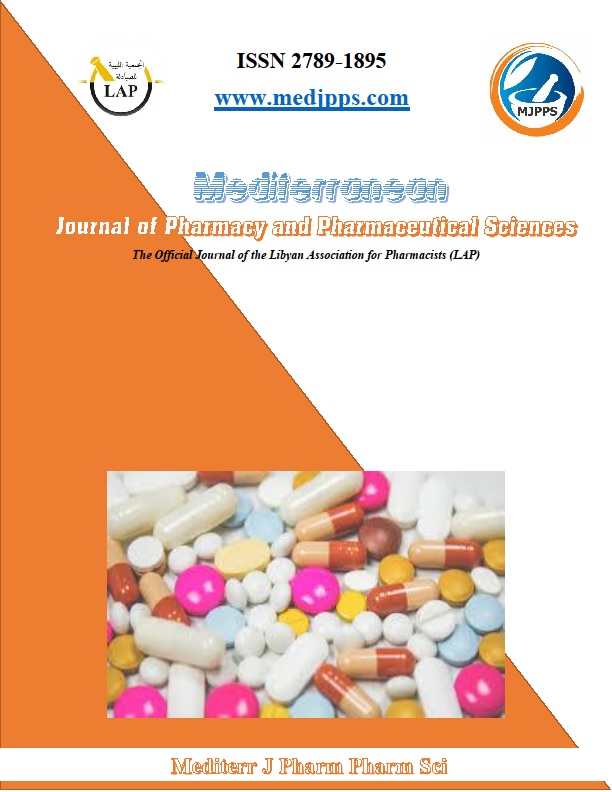 Mediterranean journal of pharmacy and pharmaceutical sciences
Natural products targeting the atr-chk1 signaling pathway in cancer therapy
Cancer is one of the most severe medical conditions in the world, causing millions of deaths each year. Chemotherapy and radiotherapy are critical treatment approaches, but both have numerous adverse health effects. Furthermore, the resistance of cancerous cells to anticancer medication leads to treatment failure. The rising burden of cancer requires novel, efficacious treatment modalities. Natural remedies offer feasible alternative options against malignancy in contrast to available synthetic medication. Selective killing of cancer cells is privileged mainstream in cancer treatment, and targeted therapy represents the new tool with the potential to pursue this aim. The discovery of innovative therapies targeting essential components of DNA damage signalling and repair pathways, such as ataxia telangiectasia mutated and Rad3-related Checkpoint kinase 1 (ATR-CHK1), has offered a possibility of significant therapeutic improvement in oncology. The activation and inhibition of this pathway account for chemopreventive and chemotherapeutic activity, respectively. Targeting this pathway can also aid in overcoming the resistance of conventional chemo- or radiotherapy. This review enlightens the anticancer role of natural products by ATR-CHK1 activation and inhibition. Additionally, these compounds have been shown to have chemotherapeutic synergistic potential when used in combination with other anticancer drugs. Ideally, this review will trigger interest in natural products targeting ATR-CHK1 and their potential efficacy and safety as cancer-lessening agents.
 Dr. salman ahmed
Indian advertising demand in terms of cultural society
Simply put, advertising is an important marketing strategy that works in conjunction with information and persuasion channels. Every single person is exposed to commercials on a daily basis. They've become an inseparable part of the print medium, whether it's newspapers or magazines, over time. This is also true in the case of broadcast media, where ad-commercials predominate. The Indian advertising industry has grown tremendously from a small business to a full-fledged industry. The purpose of this study is to determine the advertising attractions and the influence they have on Indian culture. Advertisements in India are not only used to sell products. It sells dreams, visions, and the ideal way of life, while also reinforcing stereotyped values. The longer an individual is exposed to an advertisement, the more likely it is that it will effect them. The appeals' goal is to change how people think about themselves and how they decide whether or not to buy certain things will benefit them. Because India has such a large population and cultural diversity, the advertising industry has created a wide range of advertisements to capture people's attention and persuade them to buy products. The appeals are written in such a way that they have an impact on people's purchasing decisions.
 Dr. amarjeet singh
Research capability of teachers: its correlates, determinants and implications for continuing professional development
Recently, research capability has received an overwhelming and remarkable interest among academics and practitioners. This is timely since the Department of Education had institutionalized research and encouraged teachers to engage in it to support evidence-based practice, decision-making, policy, and program development. On these premises, a study was carried out to assess the research capability of public teachers in Malaybalay City, determine its correlates and determinants. It utilized descriptive, correlational, and explanatory designs. It administered survey questionnaires to 92 participants. Data were analyzed using descriptive and inferential statistics. The results revealed that teachers were slightly capable of conducting research and having neutral attitudes toward it, motivated to write research, had a high level of difficulties in research processes, and moderately capable of action planning. They also show evidence of potential in mentoring. Further, mentoring and action planning skills, motivation to write research, attitudes toward research, and the number of studies completed by teachers were the correlates of their research capability at different magnitudes of the relationship. Notably, the research capability of teachers had a low, negative but significant relationship with their age and accumulated years of service. Thus, this capability deteriorates as they age and accumulate years of service. The motivation to write research, the number of studies completed, and age were the determinants of research capability. It was concluded that research capability can be determined and predicted by how motivated teachers are to write research, how productive they are in research, and how young they are when they engage in this rigorous endeavor. The study identified and recommended topics for continuing professional development.
 Manuel caingcoy
Human resource management
Human resource management (HRM) is the process of employing people, training them, compensating them, developing policies relating to them, and developing strategies to retain them. As a field, HRM has undergone many changes over the last twenty years, giving it an even more important role in today's organizations
Post-merger profitability of selected banks in india
The present study aims to shed some light on the gains from consolidation exercise in terms of profitability of banks. Through the application of paired t-test, we arrived at the result that the consolidation of banks did improve the profitability of banks in India. The increase in profitability of banks under study is due to an increase in employee turnover and the subsequent reduction in operating expenses. Merger and acquisition programmes in Indian banks cannot be regarded as a false step if the benefits of it accrue to all stakeholders.
 Akhil antony
Studies on reproductive organs and morpho-anatomical features of leaf and stem in three traits of vinca rosea l.
Periwinkle or Vinca rosea L. has medicinal importance with three phenotypes i.e., Pink, Red eye and White. The present investigation distinguishes the three traits i.e., white, pink and red-eyed flower-bearing traits of V. rosea based on morphology, palynology, pollen grain germination and study of anatomical features of leaf, stem and variations in parts of the flower. The results revealed that significant differences were recorded in stomatal frequency, stomatal index, size of the petals, pollen viability and pollen germination. The highest per cent viability appears in pink flower-bearing plants (98.8%) followed by red-eyed flower-bearing plants (34.3%) and White flower-bearing plants (34%). Similarly, the percentage germination of pollen grains is high in pink flower-bearing plants (98.1%) followed by red-eyed flower-bearing plants (33.3%) and white flower-bearing plants (33.3%).
 Veerabhadraswamy al
Pembelajaran edutainment dalam penanaman karakter cinta tanah air pada anak usia dini di sekolah dasar
Konsep edutainment mencoba memadukan antara pendidikan dan hiburan, yang didalam konsep edutainment tersebut terdapat beberapa pendekatan yang lebih kita kenal sebagai SAVI (Somatik, Auditori, Visual dan Intelektual). Metode penelitian ini menggunakan jenis penelitian Library research, yaitu jenis penelitian yang dilakukan dan difokuskan pada penelaahan, pengkajian dan pembahasan literature-literatur, baik klasik maupun modern. Literature berbahsa arab, inggris, Indonesia dan sebagainya yang ada kaitannya dengan persoalan ini. Penelitian ini bersifat analisis deskriptif. Sumber data penelitian ini yaitu: Sumber primer dari pemikiran Beby De Poter. Sumber skunder meliputi: buku, artikel atau esai yang membahas konsep edutainment, dan buku yang berkenaan dengan konsep psikologi belajar anak, serta buku pendidikan karakter, terutama karakter cinta tanah air. Hasil penelitian ini menunjukkan: (1) Pembelajaran Edutainment Dalam Penanaman Karakter Cinta Tanah Air Bagi Anak Usia Dini Di Sekolah Dasar, yaitu: menumbuhkan karakter cinta tanah air, memunculkan emosi minat anak seperti rasa senang dan gembira dalam pembelajaran, guru dalam menyampaikan pembelajaran di kelas harus menunjukkan sikap kepedulian terhadap peserta didik. (2) Proses Penanaman Karakter Cinta Tanah Air Bagi Anak Usia Dini Di Sekolah Dasar, yaitu: proses pembelajaran interaksi antara siswa dan guru terbangun suasana menyenangkan, fleksibiltas guru dalam menyampaikan materi menyesuaikan dengan emosi peserta didik, hubungan keakraban dan persahabatan sebagaimana teman sendiri, dan guru memberikan kebabasan berexspresi kepada perserta didik pada saat proses pembelajaran.
 Educare: journal of primary education
Importance of using basic statistics adequately in clinical research
Justificativa e objetivo: O uso inadequado da estatística básica é o maior responsável peloerro de interpretac ̧ão dos artigos científicos. O objetivo deste artigo de revisão foi rever algunstópicos básicos de estatística para alertar autores e leitores sobre a importância do relatoadequado da estatística básica.
 Kamal singh
Global business environment - healthy eating
This Document addresses the main trends around healthy eating in the global, Latin American, and Peruvian environment related to the proposed business plan. Analysis shows that with an increase in the population around the world it is important for food producing organizations to introduce new food products in order to be in the race of famous food brands. Based on qualitative and quantitative data from various sources, it is possible to know the opportunities for a plant-based burger business. This assignment aims to recognize if there is a favorable evolution for the proposal of this business plan at the different levels of the environment. The brand focused on this assignment in KFC. A plan for introducing green burgers in Peru and other regions of Latin America was developed in this paper.
Ai in healthcare domain
Artificial Intelligence (AI) has emerged as a transformative force in the healthcare domain, revolutionizing various aspects of medical research, diagnostics, treatment, and patient care. This paper provides an overview of recent developments and applications of AI in healthcare, highlighting its potential to enhance efficiency, accuracy, and accessibility in medical practices. The integration of machine learning algorithms, natural language processing, and computer vision techniques has enabled AI systems to analyze vast amounts of medical data, support clinical decision-making, and personalize treatment plans. Additionally, AI-powered technologies play a crucial role in predictive analytics, early disease detection, and the optimization of healthcare workflows. Despite the promising advancements, challenges related to data privacy, ethical considerations, and regulatory frameworks need to be addressed to fully harness the benefits of AI in healthcare.
 Dhruvitkumar talati
Most Popular Category
- Pharmacy (270)
- Education and social science (224)
- Pharmacology (223)
- Pharmacognosy (178)
- Business management (147)
- Pharmacology and toxicology (134)
- Education and training (131)
- Pharmaceutical sciences (130)
- Medicine (129)
- Research (123)
- Health Science (100)
- Biological Sciences (99)
- Management (98)
- Computer Science (94)
- Public health (91)
- Computer Science Applications (87)
- Human resource management (83)
- Engineering (80)
- Accounting and finance (73)
- Information technology (69)